


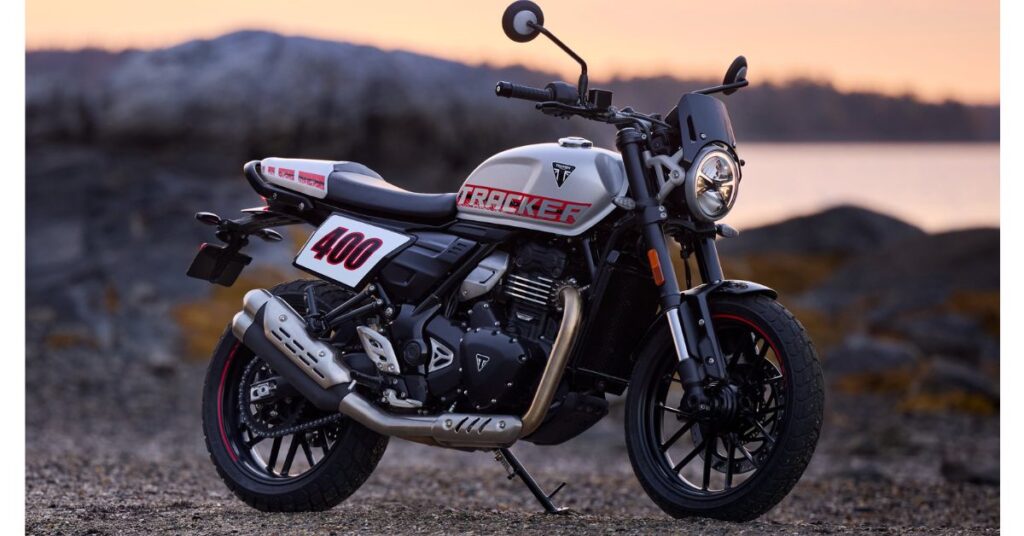
The Triumph Tracker 400 has officially been unveiled, marking the sixth entry in the highly successful 400cc platform co-developed with Bajaj. While the Speed 400 was built for the urban gentleman and the Scrambler 400 X for the weekend trail-seeker, the Tracker 400 is the “hooligan” of the family, drawing heavy inspiration from the flat-track racing culture of the 1920s.
Engine and Performance
At the heart of the Triumph Tracker 400 is the familiar 398.15cc TR-Series single-cylinder engine. However, Triumph engineers didn’t just cut and paste the previous map. They’ve given this “thumper” a specialized state of tune shared with the new Thruxton 400.
遂に日本に上陸したモダンクラシックの最新モデル、新型 Thruxton 400 登場。
さらに、アグレッシブを極めた全世界待望の最新モデル、新型 Tracker 400が世界初登場。
TRシリーズ史上、最高峰のエンジンを搭載。
この2つのモデルに、妥協は不要だ。
詳しくはこちらhttps://t.co/P0LlkHZ5xz pic.twitter.com/ccLpfHLHFZ
— トライアンフ・ジャパン (@TriumphJapanKK) December 16, 2025
Power Delivery Re-imagined
While the Speed 400 offers a balanced 40 PS, the Triumph Tracker 400 pushes that figure to 42 PS (41.4 HP) at 9,000 rpm. Now, you might think, “Is 2 horsepower really going to change my life?” If you’re measuring your life in quarter-miles, maybe not. But the magic lies in where that power lives.
The Triumph Tracker 400 is designed to be rev-happy. Peak power arrives 1,000 rpm higher than on the Speed 400, encouraging the rider to wring the throttle out. The torque remains a healthy 37.5 Nm at 7000 rpm, but it’s delivered with a sharper, more urgent character.
-
Engine Type: Liquid-cooled, 4-valve, DOHC Single
-
Max Power: 42 PS @ 9,000 rpm
-
Max Torque: 37.5 Nm @ 7,500 rpm
-
Transmission: 6-Speed with Slip-and-Assist Clutch
Full Specifications
For the spec-sheet junkies, here is the full breakdown of what makes the Triumph Tracker 400 tick.
Also Read:https://newstoq.com/bajaj-pulsar-220f-launch/
Chassis and Suspension
| Component | Specification |
| Frame | Hybrid perimeter steel frame, bolt-on subframe |
| Front Suspension | 43mm USD Big Piston Forks (140mm travel) |
| Rear Suspension | Gas-charged monoshock with preload adjust (130mm travel) |
| Front Brake | 300mm disc, 4-piston radial caliper, ABS |
| Rear Brake | 230mm disc, floating caliper, ABS |
| Front Tyre | 110/70 R17 (Pirelli MT60 RS) |
| Rear Tyre | 150/60 R17 (Pirelli MT60 RS) |
Dimensions and Weights
| Metric | Detail |
| Seat Height | 805 mm |
| Kerb Weight | 173 kg |
| Fuel Capacity | 13 Litres |
| Wheelbase | 1371 mm |
| Rake / Trail | 24.4° / 99.4 mm |
Ergonomics: The “Elbows-Out” Philosophy
If the Speed 400 is a handshake, the Tracker 400 is a shove. The ergonomics have been radically shifted to facilitate what Triumph calls a “dominating” riding posture.
Handlebars and Footpegs
The handlebars are the centerpiece of the ergonomic change. They are 23mm wider and a staggering 134mm lower than those on the Speed 400. This forces the rider into a forward-pitched, aggressive stance.
To complement the bars, the footpegs have been moved 86mm back and 27mm higher. You aren’t just sitting on this bike; you are “cocked” and ready to dive into a corner. While this might make long-distance touring a bit of a literal pain in the back, for short urban sprints and canyon carving, it provides unparalleled leverage over the machine.
Electronics and Features
Triumph has avoided the temptation to overcomplicate the Triumph Tracker 400. You won’t find a massive iPad-style screen on the dash. Instead, you get a class-leading semi-digital cluster that fits the bike’s “analogue” soul.
Rider Aids
-
Ride-by-Wire: Ensures crisp, immediate throttle response.
-
Switchable Traction Control: Vital for those who actually want to slide the rear on a dirt track.
-
Dual-Channel ABS: Standard safety, though many enthusiasts wish the rear was switchable for full “tracker” antics.
-
LED Everything: From the signature round DRL headlamp to the minimalist rectangular tail-light.
The bike also includes a USB-C charging port tucked neatly near the headstock, acknowledging that even hooligans need Google Maps.
While the Triumph Tracker 400 is manufactured by Bajaj in India, its immediate future in the domestic Indian market is a bit of a mystery. At the unveiling, Triumph confirmed the UK and US markets for early 2026.
Some industry experts suggest that India might see a Tracker 350 variant instead. Why? To navigate the complex GST (Goods and Services Tax) reforms that penalize bikes above 350cc. However, given the success of the Speed 400, many fans are holding out hope for the full-fat 400cc version.