
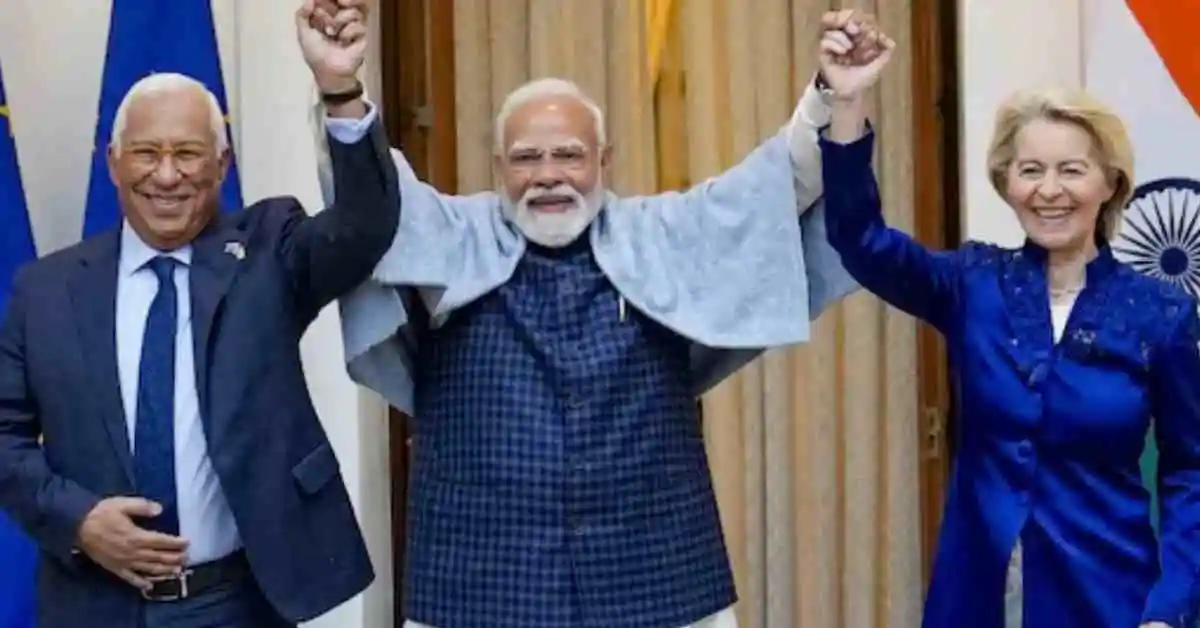
The India EU Trade Deal (formally the Free Trade Agreement or FTA) was officially concluded on January 27, 2026. This landmark agreement is set to dismantle the high “tariff walls” that have protected the Indian automotive market since the 1940s. For the automobile sector, this isn’t just a policy tweak; it is a structural earthquake.
The Great Tariff Takedown: 110% to 10%
Before India EU Trade Deal, India’s import duty structure was one of the steepest globally. Fully Built Units (CBUs) priced above $40,000 were slapped with a 110% effective duty. If a Porsche left a factory in Stuttgart costing ₹1 crore, it landed in an Indian showroom at nearly ₹2.5 crore after all taxes.
Also Read:https://newstoq.com/mahindra-xev-9s-and-7xo-booking/
The New Reality
Under the 2026 India EU Trade Deal, India has introduced a quota-based tariff reduction. This means a specific number of European vehicles can now enter India at significantly lower rates:
-
Initial Drop: Duties on eligible cars within the quota will immediately fall to 40% starting in 2026.
-
The 5-Year Goal: Over the next five years, these tariffs will gradually taper down to a mere 10%.
-
The Quota: This concessional rate applies to a generous quota of 250,000 vehicles annually—more than six times the size of the recent India-UK trade deal quota.
2. Which Vehicles Actually Get Cheaper?
The government wouldn’t want to destroy the local “budget car” market. To protect domestic giants like Maruti Suzuki, Tata Motors, and Mahindra, the deal has a price floor.
Also Read:https://newstoq.com/skoda-kushaq-facelift-officially-teased/
The “Luxury” Threshold
The duty cuts only apply to vehicles with a landed value (CIF) of over €15,000 (roughly ₹13.5 lakh).
Once you add GST (28%), compensation cess (up to 22%), and registration, this effectively means only cars with an ex-showroom price of ₹25 lakh and above will benefit.
Winners vs. Protected Segments
| Beneficiaries (Cheaper) | Protected (No Change) |
| Luxury Sedans (BMW 3 Series, Audi A4) | Mass-market Hatchbacks (Alto, Swift) |
| Performance SUVs (Mercedes GLE, Land Rover) | Sub-compact SUVs (Nexon, Venue) |
| Supercars (Ferrari, Lamborghini) | Budget EVs (Tiago EV, Punch EV) |
| Performance Imports (Golf GTI, Octavia vRS) | Commercial Trucks & Rickshaws |
3. The Impact on Prices:
When the import duty drops, it doesn’t just lower the tax; it lowers the base value on which GST and Cesses are calculated. This creates a “cascading” effect of savings.
Based on validated 2026 projections, here is how the pricing might look for popular European imports:
Also Read:https://echodesknews.blogspot.com/2026/01/ather-450x-ota-update-infinite-cruise.html
| Model | Current Price (110% Duty) | 2026 Price (40% Duty) | Total Savings |
| Volkswagen Golf GTI | ₹52.0 Lakh | ₹36.0 Lakh | ₹16.0 Lakh |
| BMW M4 Competition | ₹1.55 Crore | ₹1.08 Crore | ₹47.0 Lakh |
| Porsche 911 Carrera | ₹2.10 Crore | ₹1.47 Crore | ₹63.0 Lakh |
| Audi RS Q8 | ₹2.30 Crore | ₹1.60 Crore | ₹70.0 Lakh |
4. The “Electric” Catch:
While the deal is aggressive on petrol and diesel (ICE) engines, the India EU trade deal treats Electric Vehicles (EVs) with extreme caution.
India is currently building its own EV ecosystem with massive investments from Tata and Mahindra. To prevent cheap European EV imports from “dumping” into the market, the deal includes a 5-year grace period.
-
No immediate duty cuts for EVs.
-
Tariff reductions for electric cars will only begin after 2031.
-
The goal is to give Indian manufacturers time to achieve “economies of scale” before facing direct competition from the likes of the Volkswagen ID series or Mercedes EQ range.
5. Auto Components & Spares:
The most significant long-term value of this deal isn’t for the rich person buying a Ferrari; it’s for the local manufacturing ecosystem.
Zero-Duty Components
Under India EU trade deal both side have agreed to eliminate duties on most auto parts over the next 5 to 10 years.
-
For the Consumer: This means the cost of maintaining a European car will drop. No more waiting 3 months for a “₹2 lakh side mirror” that costs ₹20,000 in Germany.
-
For the Industry: Indian component makers (like those in the Chennai and Pune clusters) now get duty-free access to the massive European market.
6. How India Benefits in Return:
India EU Trade Deal is a two-way street. Prime Minister Modi’s “Mother of all Deals” secured a massive win for Indian exports. For every 1 car quota India gives the EU, India receives a 2.5x export quota into Europe.
This means Indian-made vehicles (like the Maruti Suzuki e-Vitara or Tata’s upcoming global platforms) can enter the EU with zero or near-zero duties. This is expected to push Indian vehicle exports to Europe toward a target of $60 billion by 2030.
7. Will Prices Drop Tomorrow?
Expertly speaking on India EU trade deal, you shouldn’t run to the dealership with your checkbook just yet. The negotiations concluded in late January 2026, but the legal scrubbing and ratification by the European Parliament and the Indian Cabinet will take roughly 5 to 6 months.
Expected Timeline:
-
Mid-2026: Final signing and ratification.
-
Early 2027: The first batch of “In-Quota” cars arrives at the 40% duty rate.
-
2030-2032: Tariffs hit the floor of 10%.
The Expert Verdict
The India EU trade deal is a masterclass in balanced logic. It opens the doors for premium technology and “enthusiast” cars (like the Golf GTI or Octavia vRS) to return to India, while simultaneously protecting the hatchbacks that keep the Indian middle class moving.
While your local Mercedes dealer might not cut prices by 40% immediately due to currency fluctuations and “brand positioning,” the structural cost of doing business has just plummeted. In the long run, this will force better technology, safer cars, and more competitive pricing across the entire Indian automobile sector.
1 thought on “How the 2026 India EU Trade Deal Will Reshape the Indian Auto Industry”