


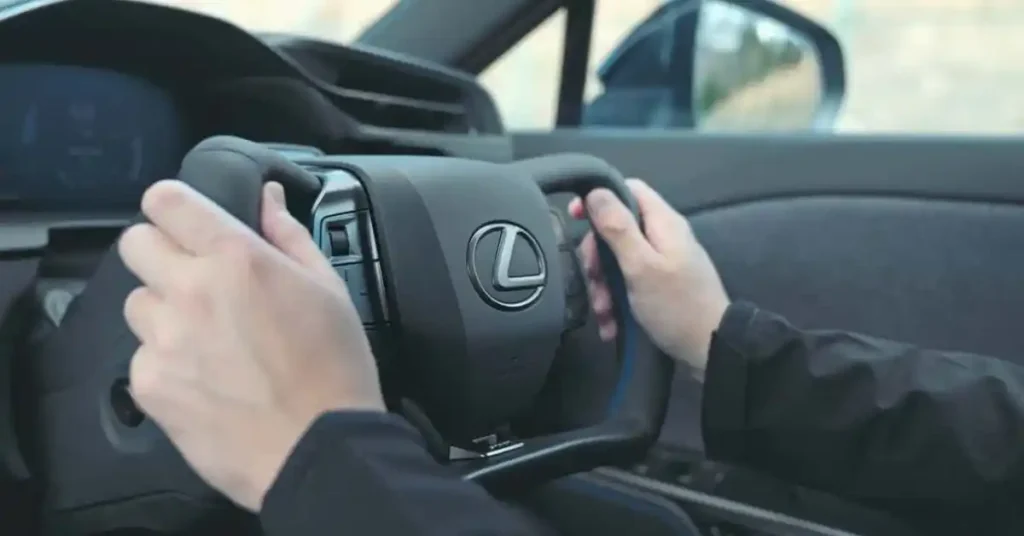
China’s MIIT proposes GB 11557-202X, a new safety standard banning yoke steering wheels by 2027. Discover the impact on EVs and global automotive safety. The new GB 11557-202X safety standard aims to eliminate “half-steering” designs in favor of traditional circular wheels, citing driver safety and ergonomic stability.
In a move that could reshape the interior design of future electric vehicles (EVs), China’s Ministry of Industry and Information Technology (MIIT) has released a draft proposal for a new mandatory national safety standard. The regulation, designated as GB 11557-202X, effectively mandates that all passenger vehicles must be equipped with a full-perimeter steering wheel, thereby banning the yoke steering wheels or “half-steering” wheels popularized by several high-end EV manufacturers.
If finalized, the new standard is slated to take effect on January 1, 2027, forcing a major design pivot for automakers operating within the world’s largest automotive market.
Policy Details
The proposed yoke steering wheels, titled “Performance Requirements and Test Methods for the Protection of Drivers Against the Steering Mechanism in the Event of an Impact,” is an update to China’s existing automotive safety framework.
Unlike previous iterations that allowed for experimental steering geometries, the 202X draft specifically outlines requirements for the physical structure of the steering control. The MIIT proposal dictates that the steering mechanism must provide a continuous surface for the driver to grip during emergency maneuvers. By requiring a closed-loop or traditional circular/D-shaped architecture, the standard removes the legal “gray area” that currently allows yoke designs to be sold in the Chinese market.
Also Read:https://newstoq.com/anthropic-claude-sonnet-4-6-arrives/
What Are Yoke-Style Wheels?
Yoke Steering Wheels often called “half-wheels” or rectangular controls—resemble the flight yokes found in aircraft or Formula 1 cars. They lack the top section of a traditional steering wheel, providing a rectangular or “U” shaped grip.
Industry Examples:
-
Tesla: Introduced the yoke on the Model S and Model X Plaid variants.
-
Lexus: Utilized a yoke in the RZ 450e, paired with a steer-by-wire system.
-
Toyota: Featured the design in early bZ4X concepts.
-
Local Chinese Brands: Several premium domestic EVs had begun exploring yoke options to emphasize a futuristic, “sci-fi” cabin aesthetic.
While proponents argue that yokes offer an unobstructed view of the instrument cluster and look more modern, critics have long pointed to the difficulty of hand-over-hand turning at low speeds.
Also Read:https://newstoq.com/samsung-confirms-galaxy-unpacked-event/
Safety Rationale
The MIIT’s primary concern centers on ergonomic reliability during critical driving moments. In its explanatory note accompanying the draft, the ministry suggests that non-traditional steering shapes can lead to “operational confusion” when a driver needs to rotate the wheel rapidly to avoid a collision.
Key Safety Concerns Identified:
-
Hand-Over-Hand Maneuvering: Without a top rim, drivers may “grab air” when performing tight turns, increasing the risk of losing control.
-
Physical Protection: During a frontal impact, a full steering wheel provides a more predictable surface area for the driver’s body and the airbag deployment path.
-
Muscle Memory: The MIIT emphasizes that the vast majority of drivers are trained on circular wheels; sudden transitions to yokes in high-stress situations can delay reaction times.
Industry & Market Impact
The ripple effects of yoke steering wheels ban will be felt most acutely by Tesla and premium domestic brands like Zeekr and HiPhi, which have used the yoke as a key selling point for their high-tech interiors.
Automakers will now face significant compliance challenges:
-
Redesign Costs: Manufacturers must redesign interior cockpits to accommodate traditional wheels without blocking digital displays.
-
Inventory Shifts: Vehicles currently in production or the “pipeline” for 2027 will need immediate hardware adjustments.
-
Steer-by-Wire Stalls: The yoke was seen as the perfect companion for “steer-by-wire” technology (which adjusts steering ratios based on speed). Without the yoke, the visual appeal of these advanced systems may diminish.
“This is a significant regulatory hurdle for the ‘minimalist’ design movement,” noted one industry analyst in Shanghai. “It signals that China is prioritizing safety-tested ergonomics over futuristic aesthetics.”
Global Context
China’s move to ban yokes places it at the stricter end of the global regulatory spectrum.
-
United States (NHTSA): Currently allows yoke wheels as long as they meet general occupant protection standards, though it has previously opened inquiries into their safety.
-
Europe (EU/ECE): Regulations are generally flexible regarding shape, provided the steering can be operated safely and meets crash-test requirements.
China’s decision to implement a hard ban on yoke steering wheels starting in 2027 could force global manufacturers to create “China-specific” interiors or simply abandon the yoke design globally to achieve economies of scale.
Also Read:https://www.jalopnik.com/2103098/china-reguating-yoke-steering-wheels/?utm_term=Autofeed&utm_campaign=Echobox-Jalopnik&utm_medium=Social-Distribution&utm_source=Twitter#Echobox=1771348908
Innovation vs. Safety
Regulatory specialists argue that the MIIT’s move is a corrective measure against “design-led” engineering.
“The yoke was a solution looking for a problem,” says Marcus Thorne, a veteran automotive safety engineer. “While it looks great in a static showroom, the physics of a 900-degree steering rack don’t work with a half-wheel. China’s standard will likely set a precedent that other nations, particularly in the EU, may observe closely as they update their own 2030 safety roadmaps.”
Timeline & Compliance
Stakeholders have until the end of the public comment period to submit feedback to the MIIT. However, the trajectory remains clear:
-
Current-2026: Manufacturers can continue selling existing yoke-equipped models.
-
January 1, 2027: All new vehicles registered in China must comply with GB 11557-202X.
-
Retrofitting: There is currently no mention of mandatory retrofitting for existing vehicles, though resale values for yoke-equipped cars in China may see a sharp decline.